1. Measuring physical quantities Prerequisite revision · beyond Chapter 4
Almost every experiment starts with a measurement. There are five physical quantities you must be able to measure in the lab, each with an SI unit and its own apparatus.
| Quantity | SI unit | Common apparatus | Worth remembering |
|---|---|---|---|
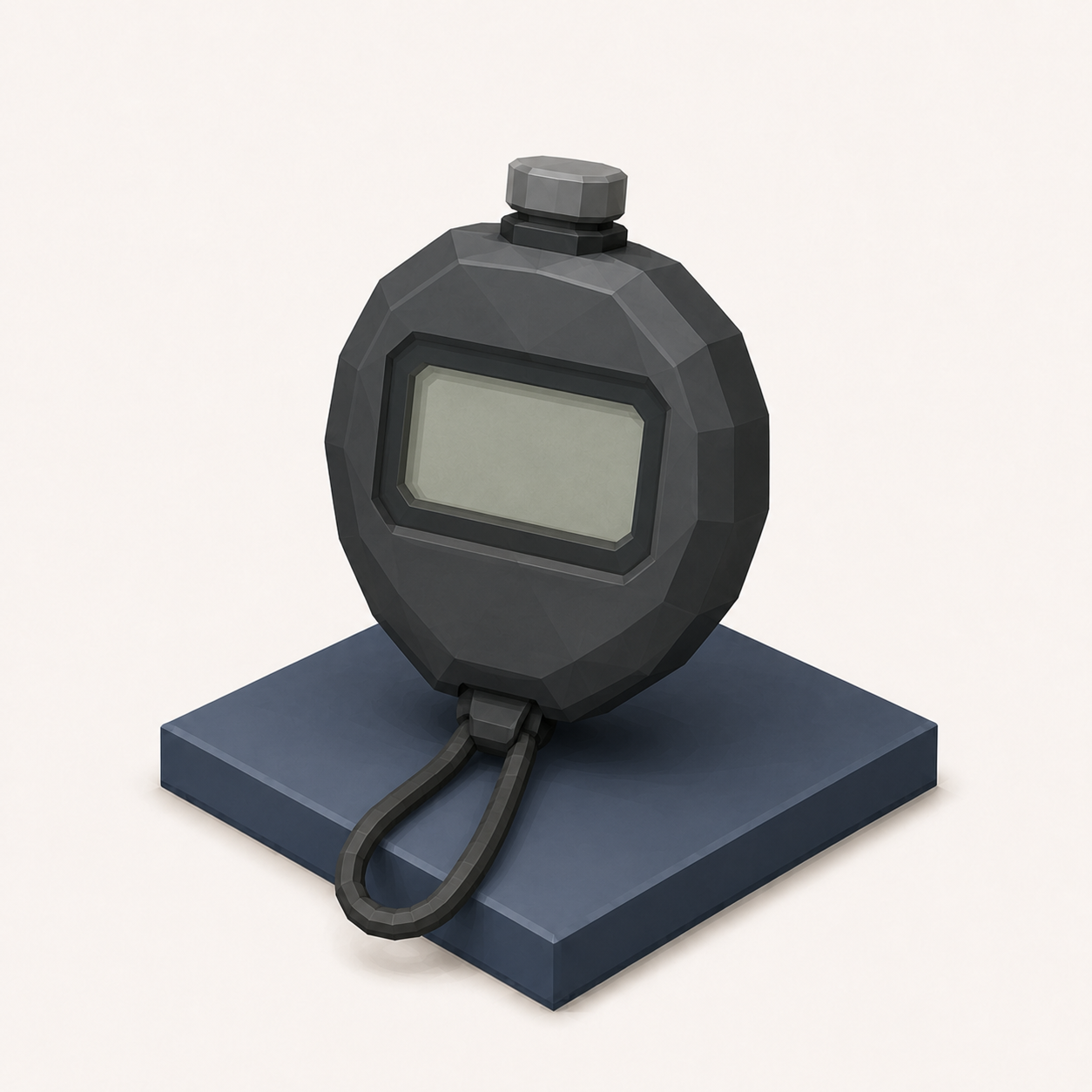
| Time | second (s) | Digital stopwatch | A digital stopwatch reads to ±0.01 s. |
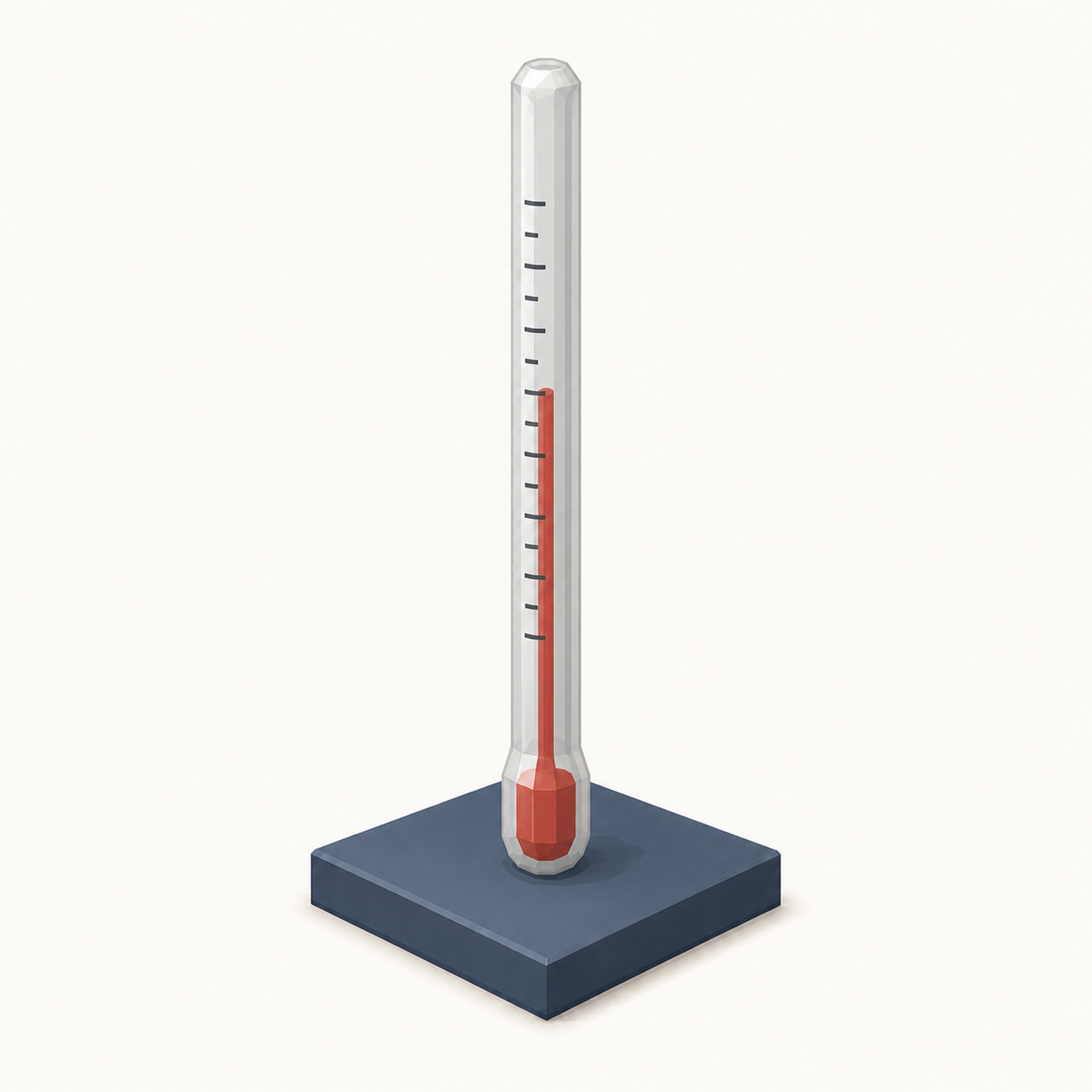
| Temperature | kelvin (K) | Thermometer (an alcohol thermometer typically covers about −10 °C to 110 °C) | Convert with K = °C + 273. A kelvin temperature can never be negative. |
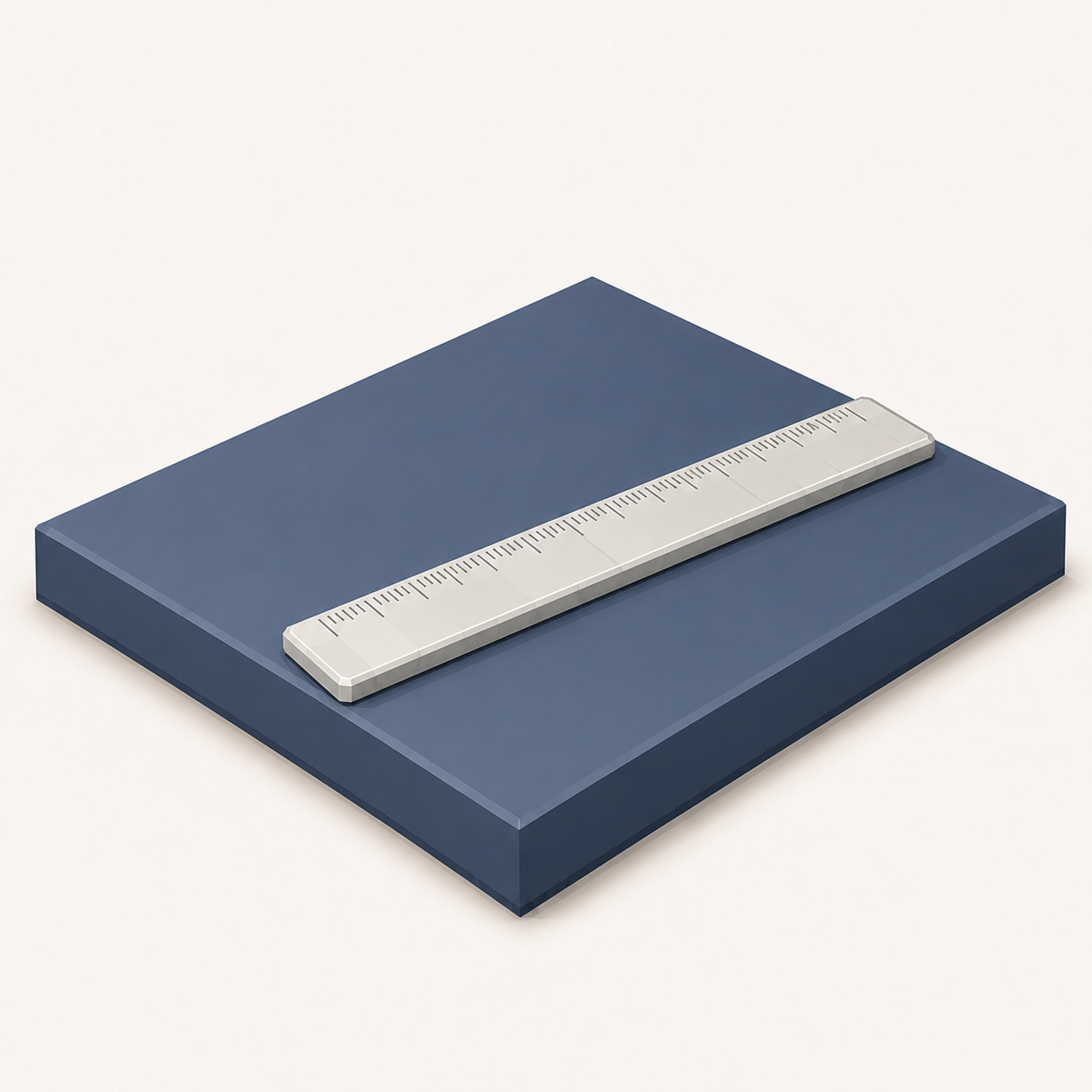
| Length | metre (m) | Metre rule | Reads to ±0.1 cm (1 mm). |
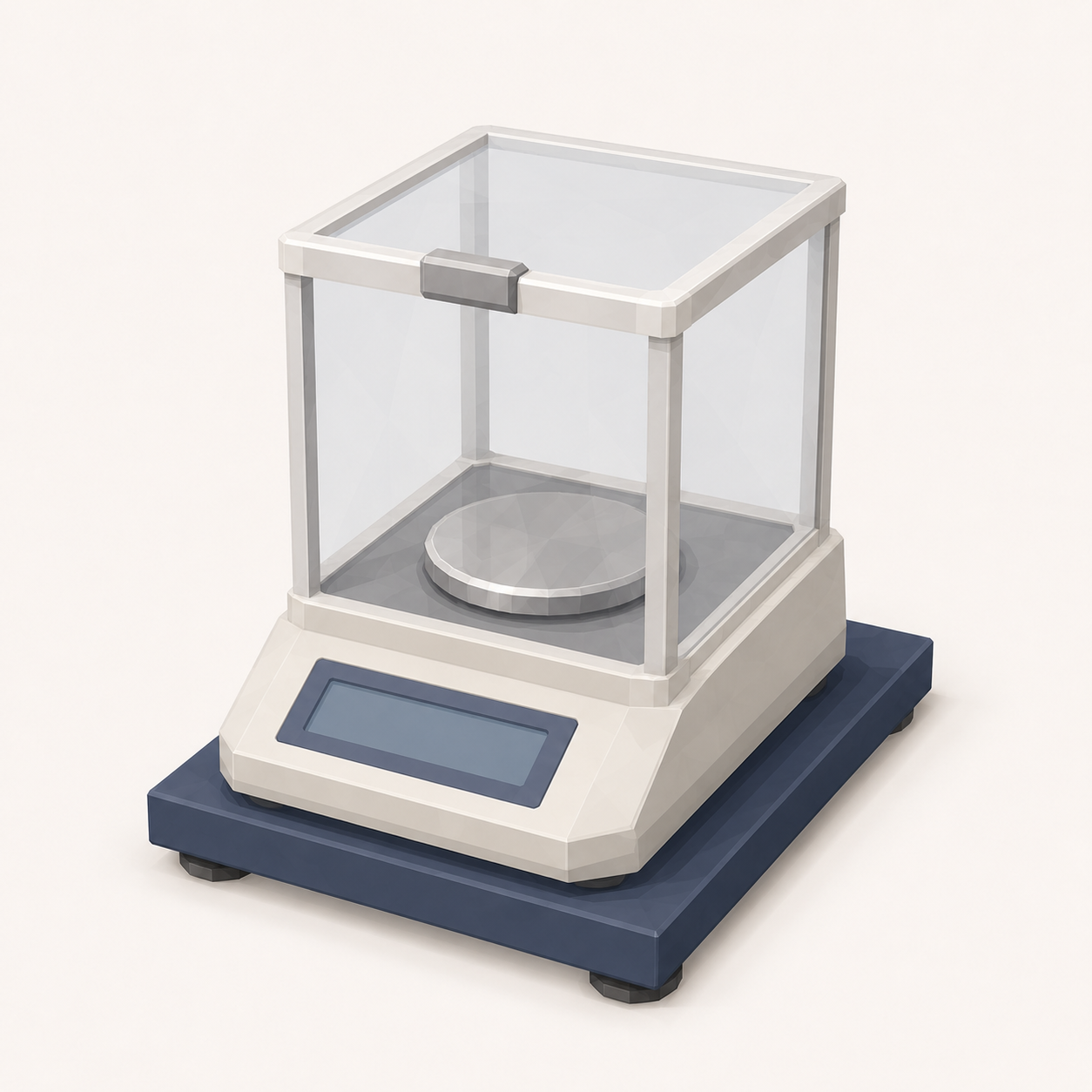
| Mass | kilogram (kg) | Electronic balance | Reads to ±0.01 g. |
| Volume | cubic metre (m³) | Pipette, volumetric flask, measuring cylinder, burette, gas syringe | In the lab we usually work in cm³ and dm³ — see below. |
Choosing the right volume apparatus
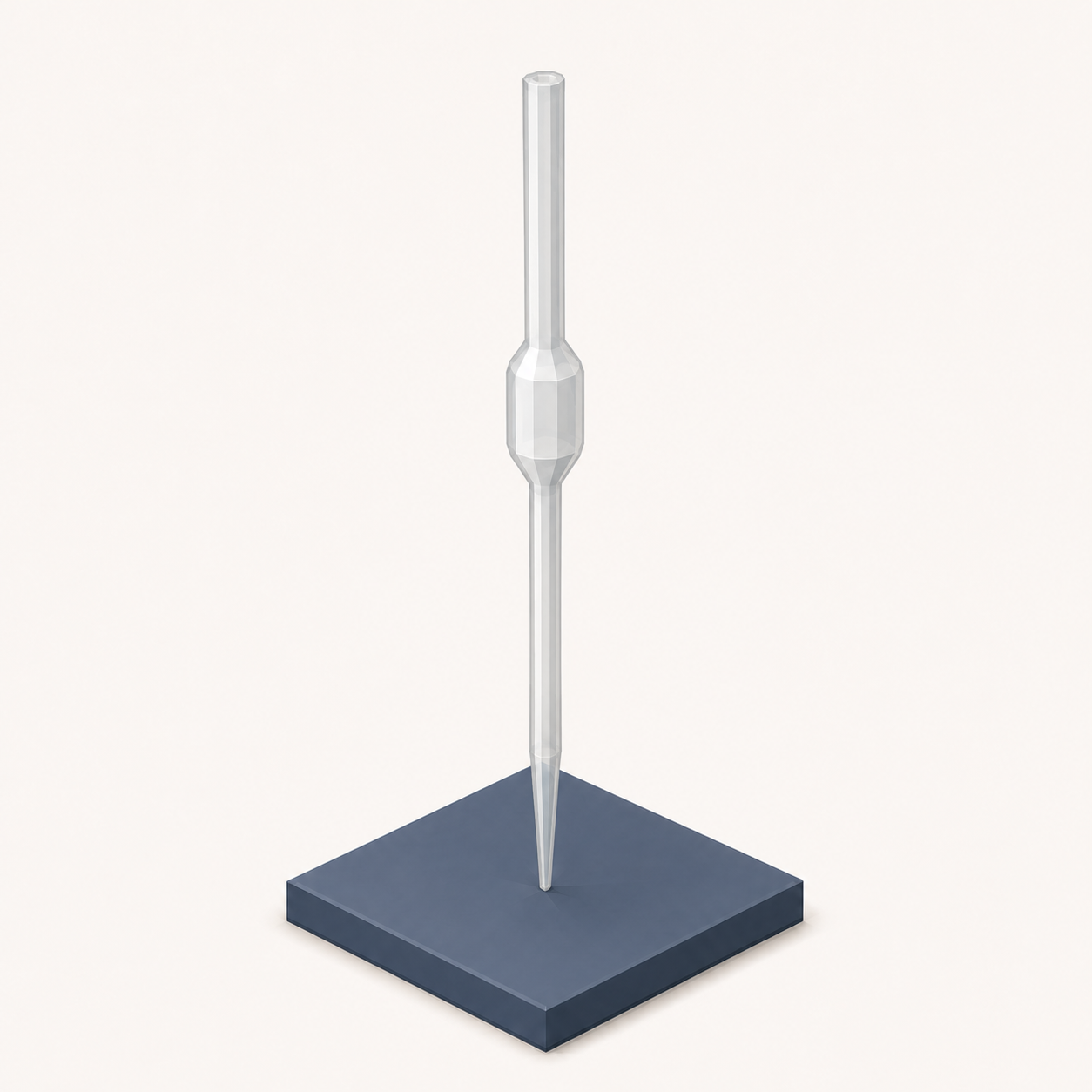
- Pipette — delivers one fixed volume very accurately, for example exactly 25.0 cm³.
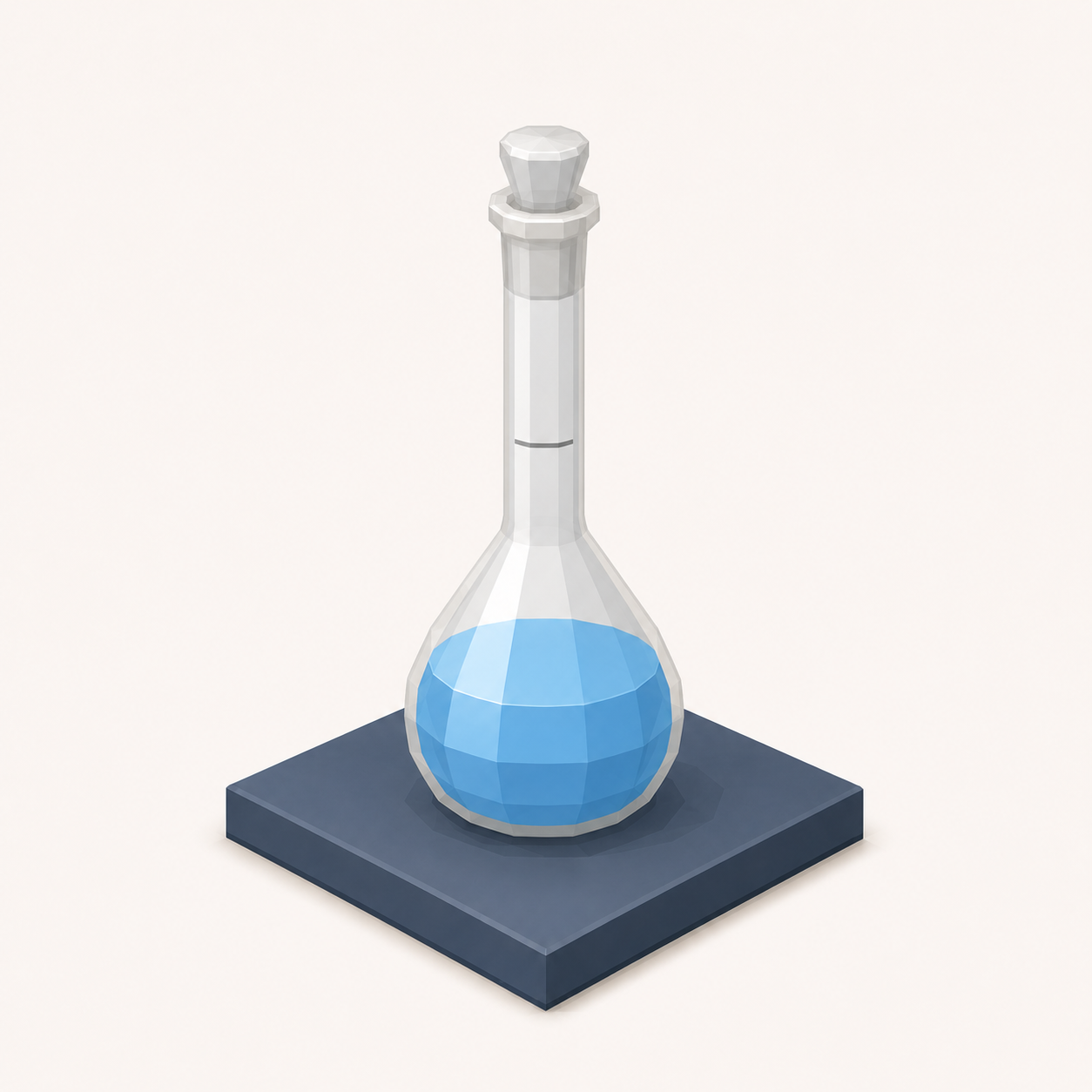
- Volumetric flask — holds one fixed, larger volume accurately (e.g. 250 cm³), used for making up standard solutions.
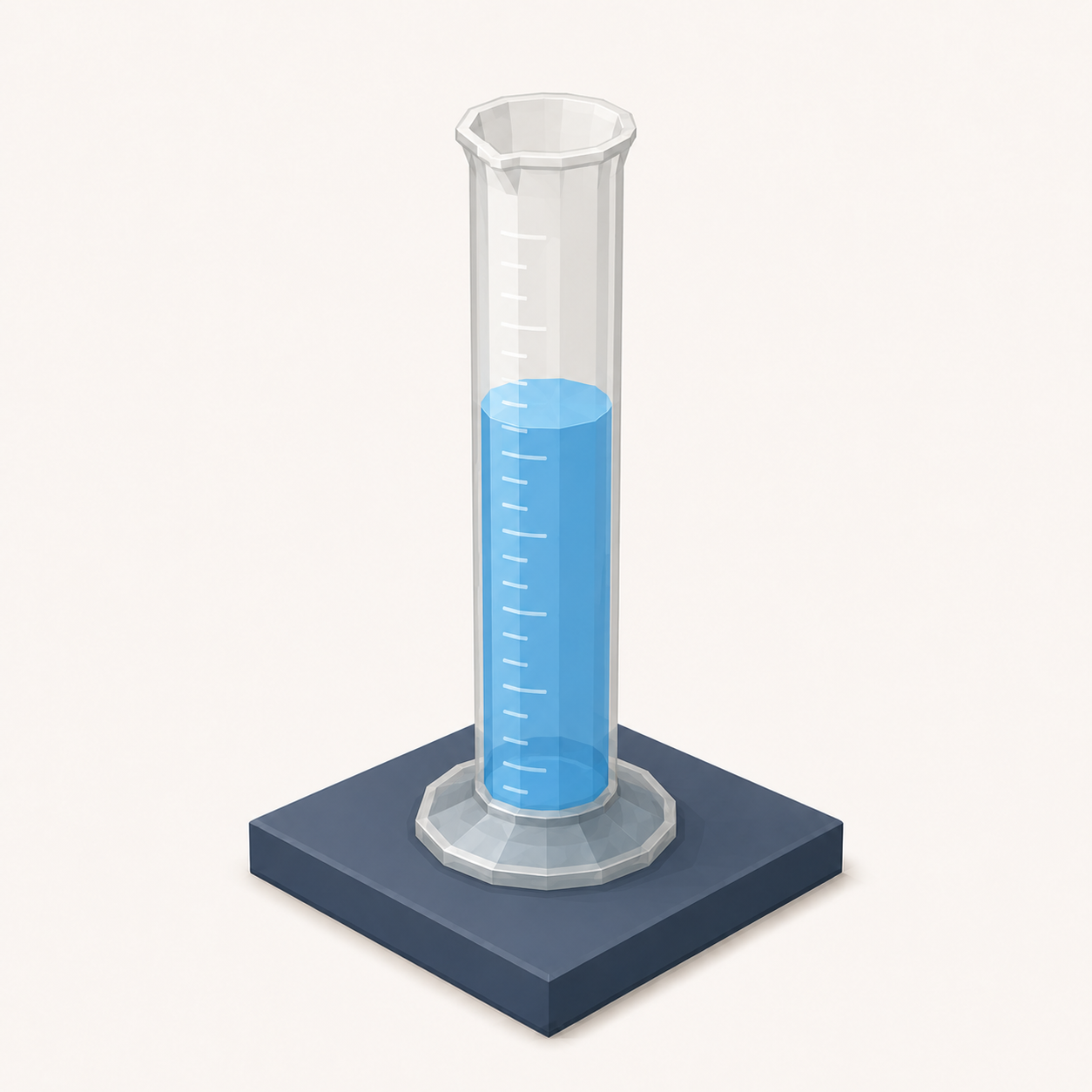
- Measuring cylinder — quick and flexible, but only reads to the nearest 0.5 cm³.
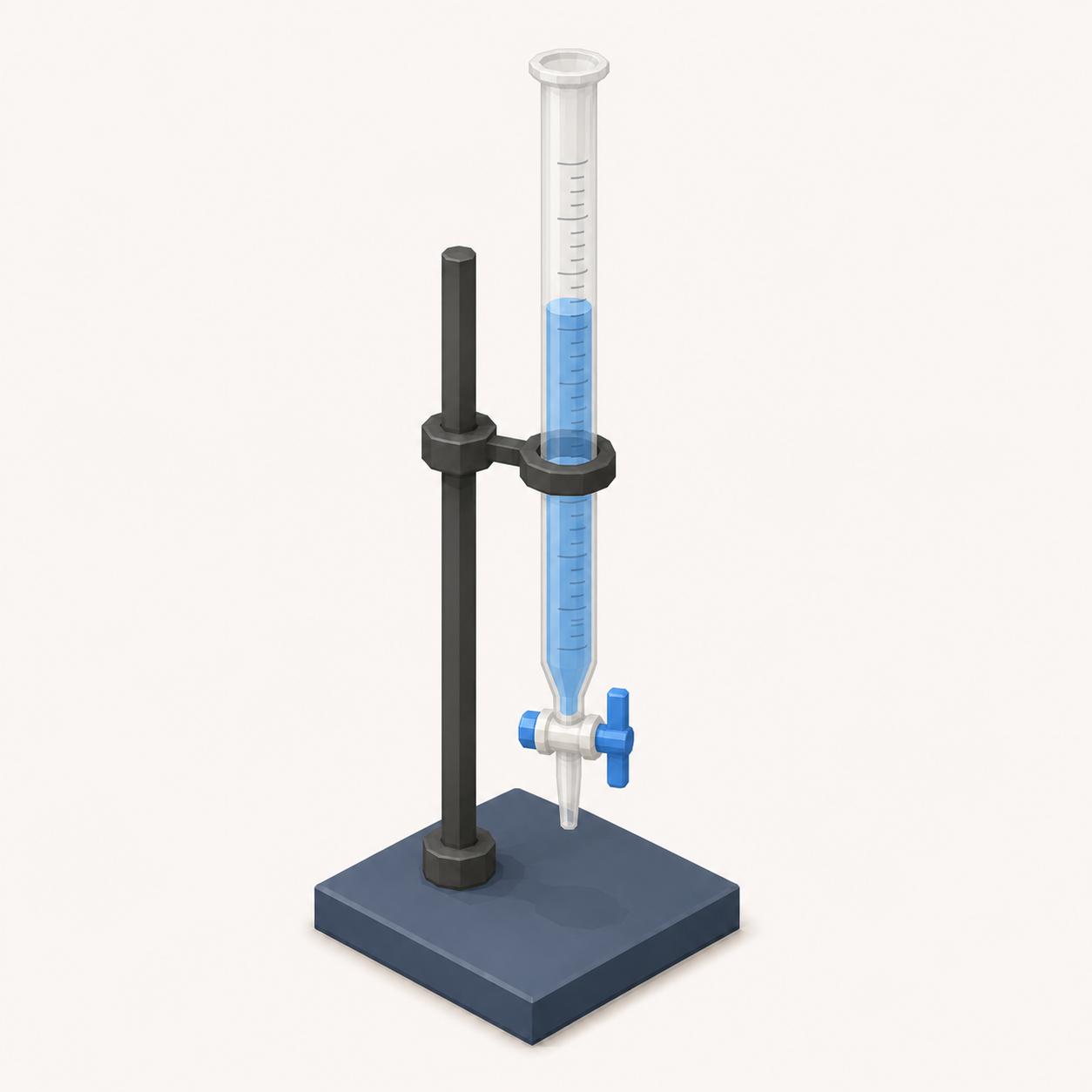
- Burette — delivers variable volumes and reads to the nearest 0.05 cm³, so it is the accurate choice when the volume is not fixed in advance.
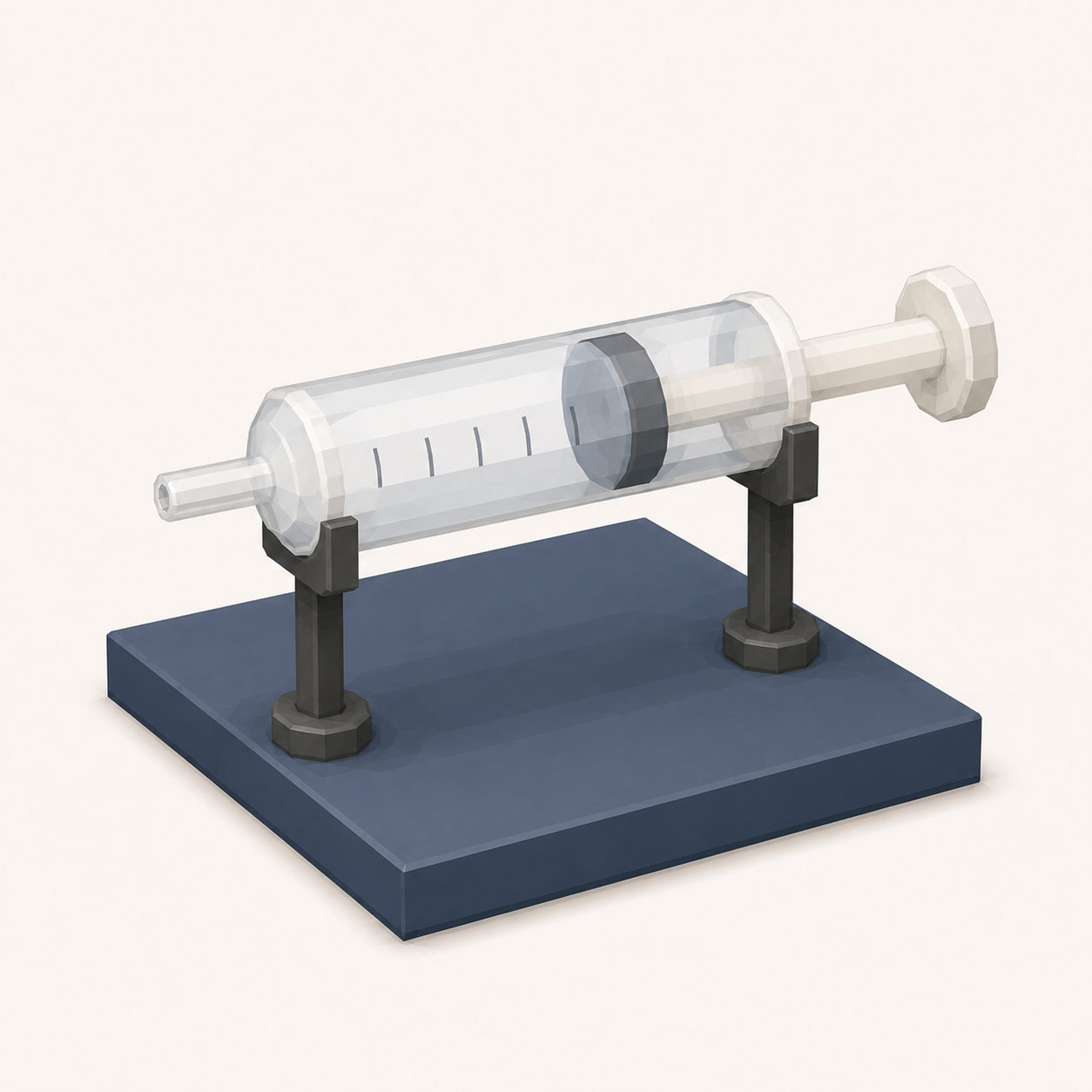
- Gas syringe — measures the volume of a gas.
Reading the meniscus
The curved surface of a liquid in a narrow tube is called the meniscus. Always read it with your eye level with the liquid surface to avoid parallax error. Water curves downwards (concave), so you read the bottom of the curve. Mercury bulges upwards (convex), so you read the top.
2. Why and how we separate mixtures
Separation techniques let us recover useful substances from mixtures — clean water from sea water, metals from scrap, salt from brine. Recovering and reusing materials supports the 3Rs (reduce, reuse, recycle) and more sustainable living.
A mixture can be separated because each component keeps its own physical properties — particle size, solubility, density, boiling or melting point, magnetism. Every technique below simply exploits one property that the components do not share. When choosing a technique we also weigh up its cost, its reliability and its impact on the environment.
| Type of mixture | Technique | Use when… |
|---|---|---|
| Solid + solid | Magnetic attraction | one solid is magnetic (iron, cobalt or nickel) and the other is not. |
| Filtration by sieving | the solids have clearly different particle sizes (the textbook calls this filtration — using a sieve to separate by particle size). | |
| Using a suitable solvent | one solid dissolves in a chosen solvent and the other does not. | |
| Solid + liquid | Filtration | the solid is insoluble — it gets trapped by the filter paper. |
| Evaporation to dryness | you want a dissolved solid back and it is heat-stable. | |
| Simple distillation | you want to keep the liquid (solvent) as well. | |
| Substances dissolved in a liquid | Paper chromatography | you want to identify small amounts of dissolved substances. |
| Reverse osmosis | you want to remove dissolved salts from water on a large scale (desalination, NEWater). |
3. Separating solid–solid mixtures
Magnetic attraction
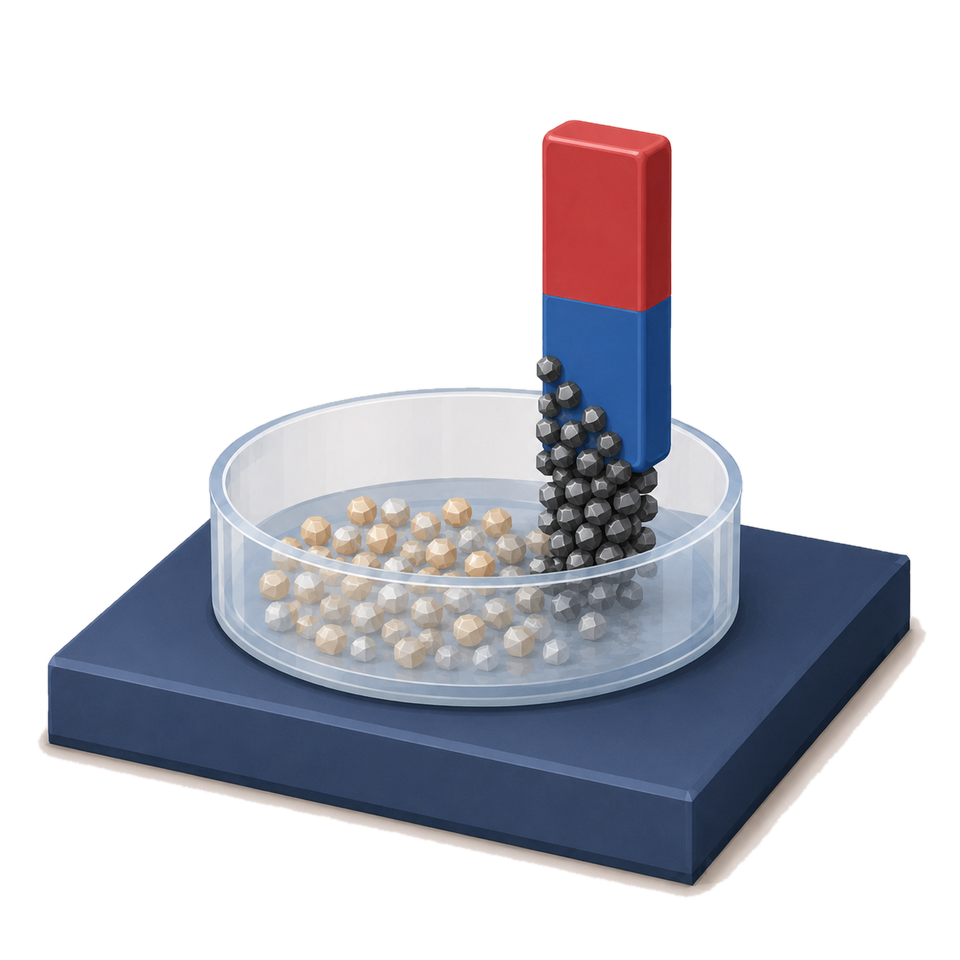
Only iron, cobalt and nickel are attracted to a magnet, so a magnet can pull one of these metals cleanly out of a mixture — for example, iron filings out of a mixture of iron and sulfur. Scrapyards and recycling plants use giant electromagnets to lift steel and iron out of mixed scrap. Try it in the magnetic-attraction lab →
Sieving — a form of filtration
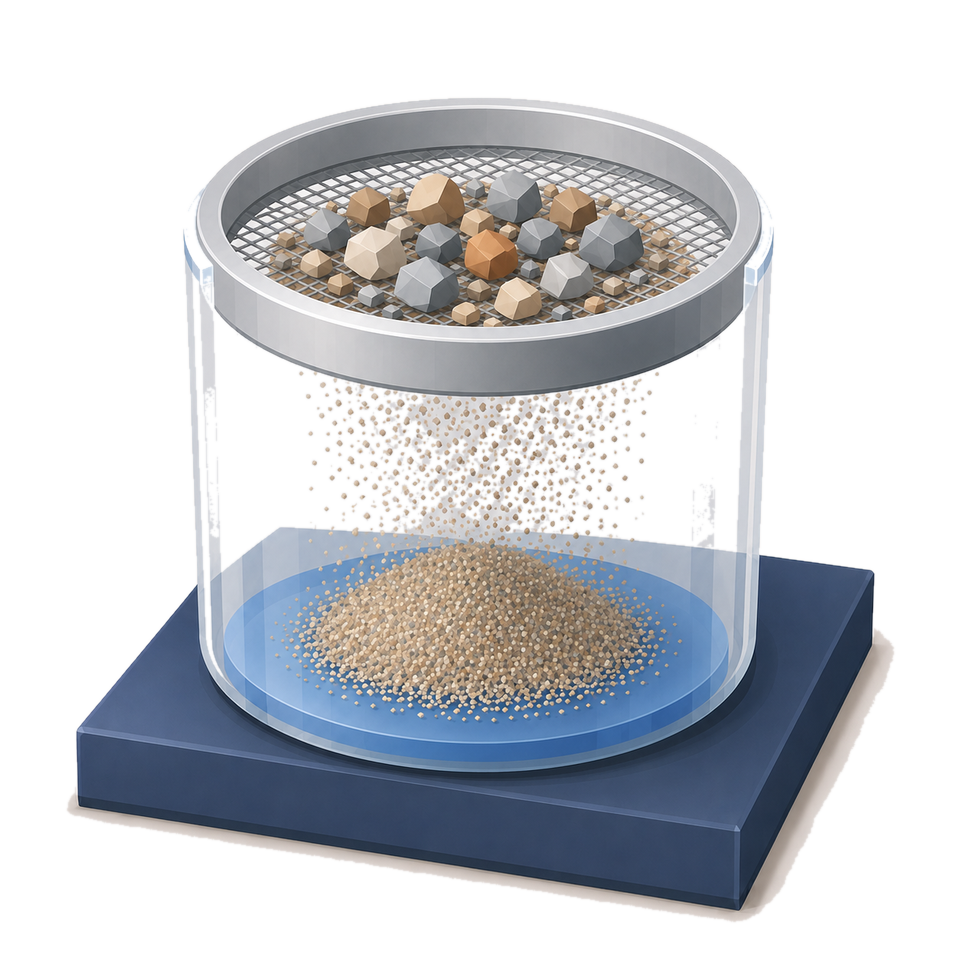
A sieve separates solids by particle size: small particles fall through the mesh, large ones stay behind. Bakers sieve flour to remove lumps, and archaeologists sieve soil so that tiny artefacts are caught while the fine earth passes through. The textbook does not treat sieving as a separate technique — it defines filtration as separating substances of different particle sizes using a sieve, so if a question asks which technique uses a sieve, the answer to write is filtration.
Using a suitable solvent
If one solid dissolves in a solvent and the other does not, add the solvent, stir, then filter. Classic example: salt mixed with sand. Water dissolves the salt but not the sand, so filtering removes the sand and evaporating the salty filtrate gives back the salt.
4. Separating solid–liquid mixtures
Filtration — for insoluble solids
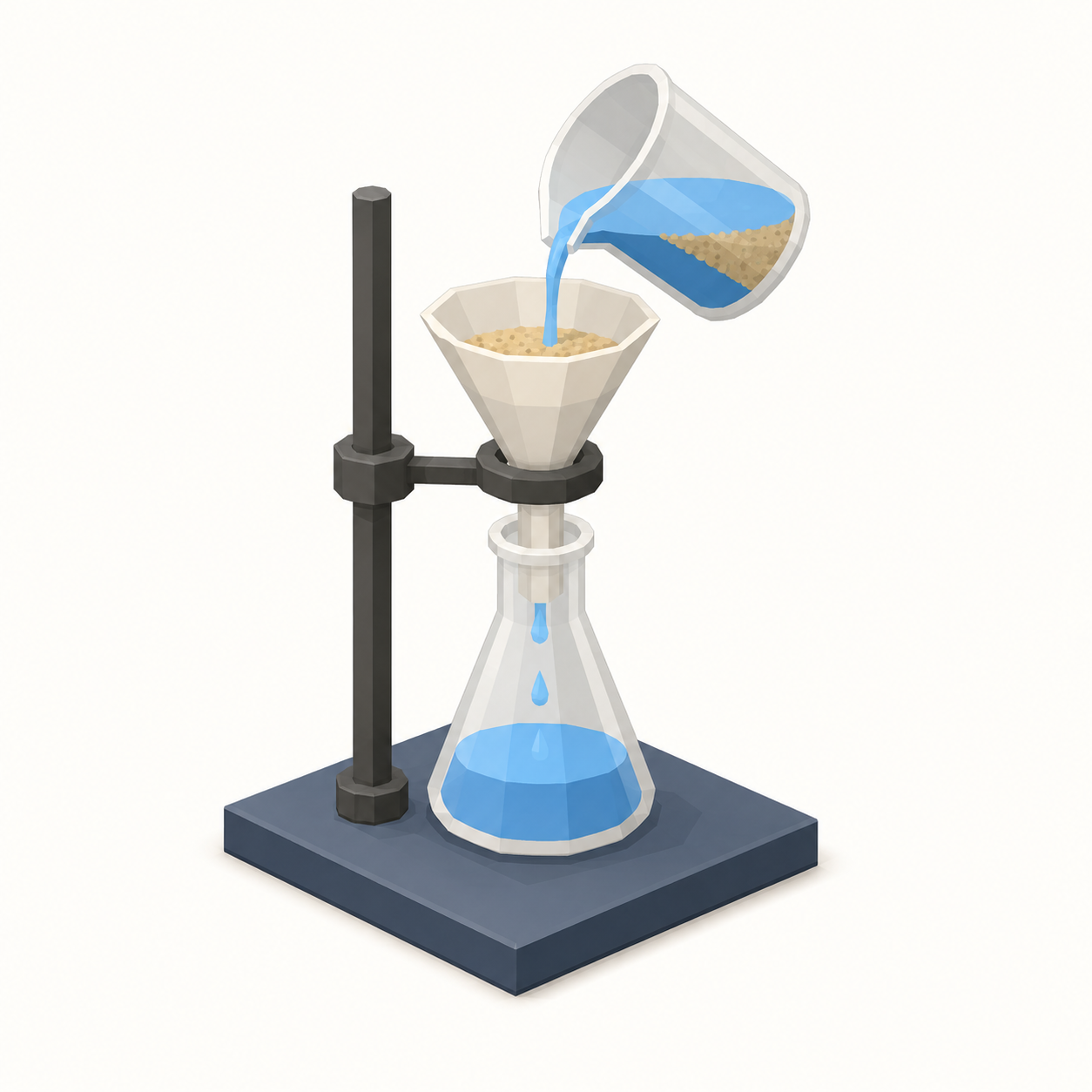
Pour the mixture through filter paper folded into a cone inside a funnel. The paper acts like an extremely fine sieve: liquid passes through its tiny pores while insoluble solid particles are too large and get trapped.
- The solid left on the paper is the residue.
- The liquid that passes through is the filtrate.
Try it in the filtration lab →
Evaporation to dryness — for dissolved solids
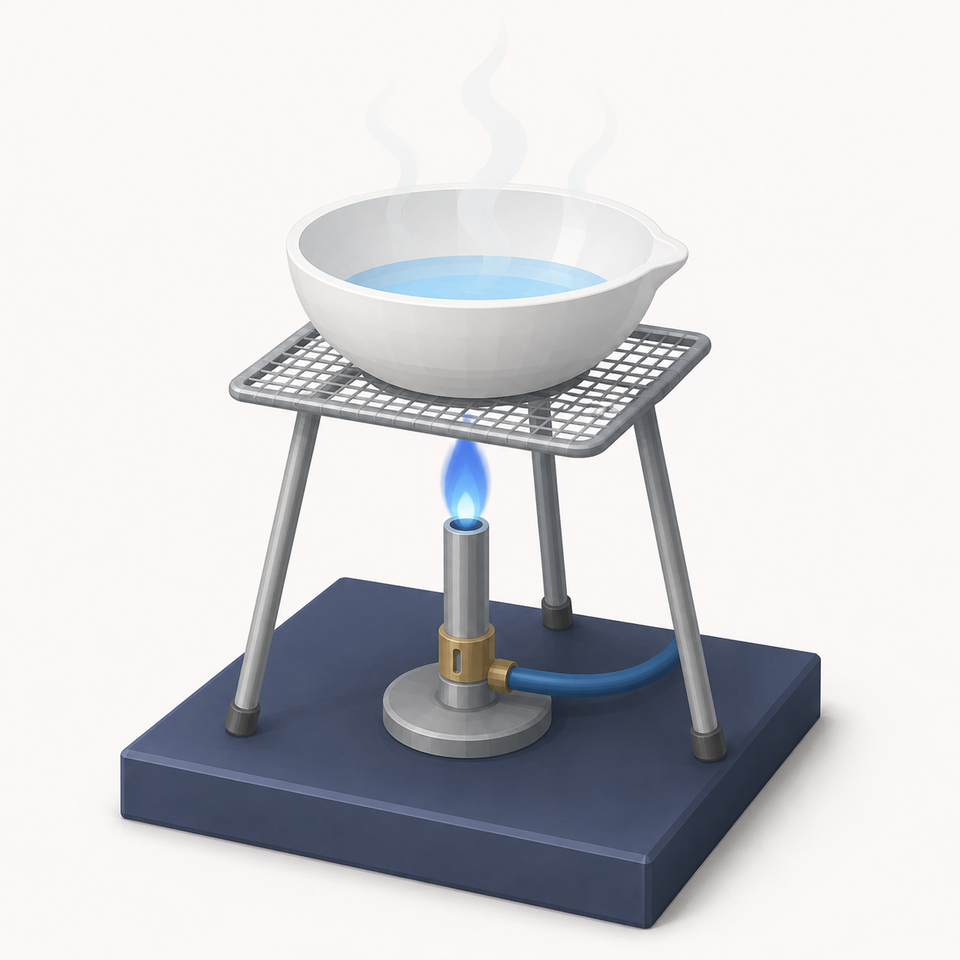
Heat the solution in an evaporating dish until all of the solvent has boiled away, leaving the solid behind. It is fast, but it has two limitations:
- Some solids decompose when heated strongly — sugar, for example, chars into a black mess instead of coming back as crystals.
- Everything dissolved comes out together, so the solid you get may actually be a mixture of several salts, not one pure substance.
Evaporation is an old idea put to everyday use: sea water is evaporated in shallow ponds to harvest salt, and drying foods such as salted fish is a traditional way of preserving food. Try it in the evaporation lab →
Simple distillation — when you want the liquid too
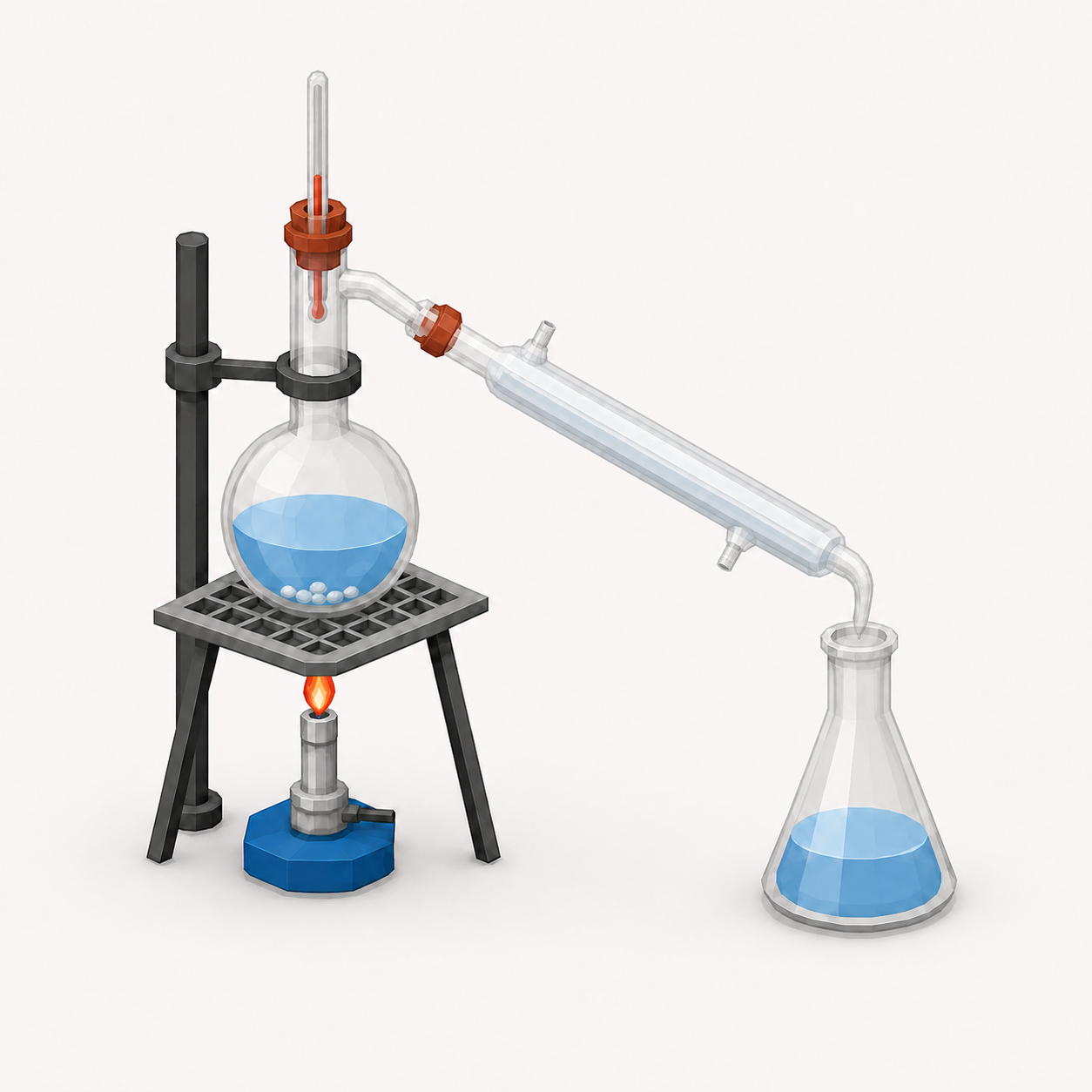
Evaporation to dryness throws the solvent away as vapour. If you want to keep both parts — say, drinking water from sea water — use simple distillation. The solution is boiled; the solvent vapour travels into a cooled condenser where it turns back into liquid, called the distillate, and drips into a receiver. The dissolved solute stays behind in the flask because its boiling point is far higher. Try it in the distillation lab →
Distillation is a laboratory-scale version of desalination — and it mirrors the natural water cycle, where the Sun evaporates sea water, the vapour condenses into clouds, and pure water falls back as rain.
Which one should I pick?
| Evaporation to dryness | Simple distillation | |
|---|---|---|
| What you keep | the solid only | the solvent (distillate) and the solute |
| Heating | strong — boil everything away | boil, but the solvent is recovered |
| Best when | the solid is heat-stable | the solvent is valuable too |
5. Separating substances in solution — paper chromatography
Chromatography — identifying what is in a mixture
Paper chromatography separates small amounts of dissolved substances. A spot of the mixture is placed on a start line drawn in pencil near the bottom of the paper (pencil, not pen — graphite is insoluble, so the line itself cannot travel and confuse the result). The paper stands in a shallow solvent. As the solvent soaks upwards, it carries the substances with it — the more soluble a substance is in that solvent, the further it travels. The finished paper, with its separated spots, is called a chromatogram.
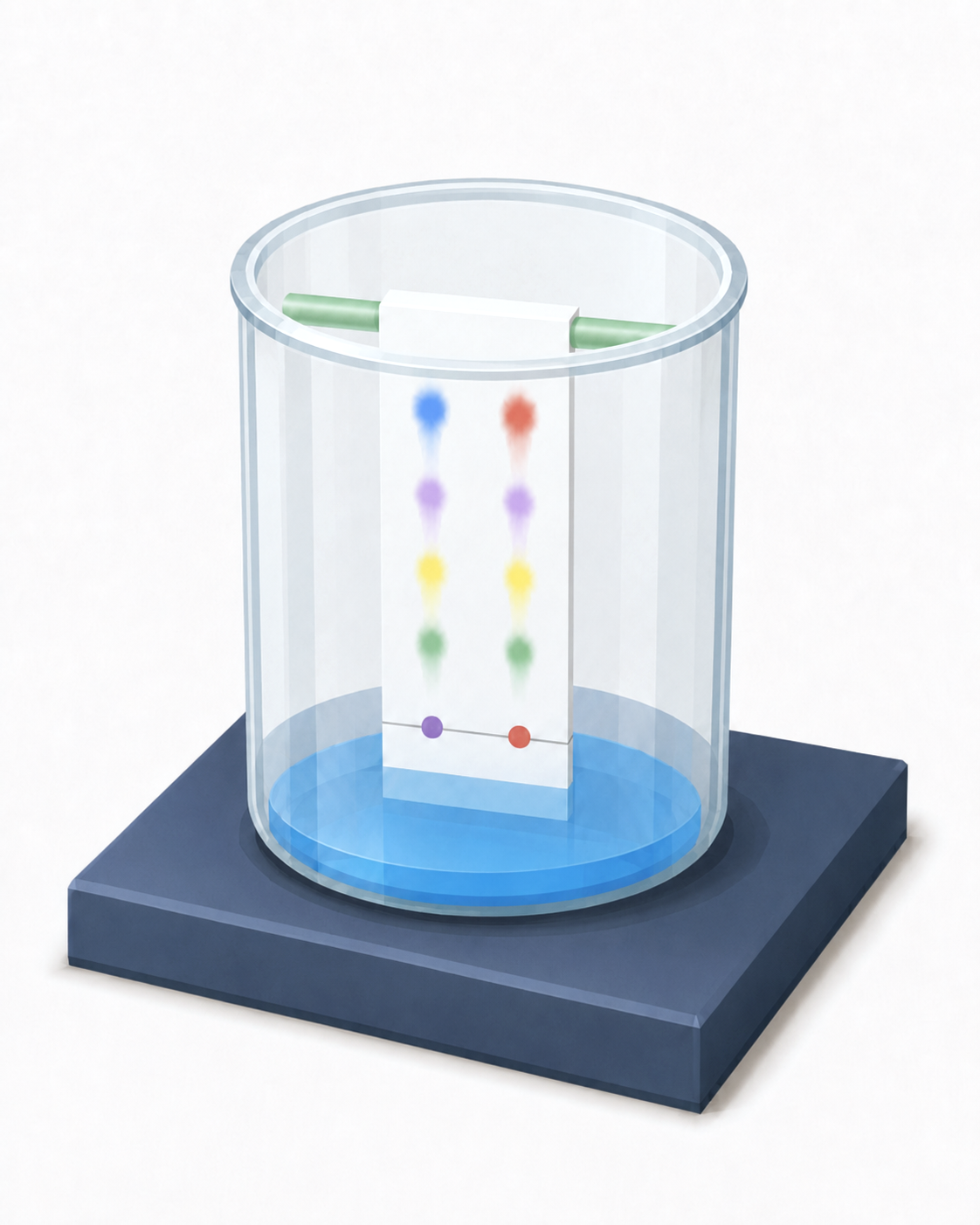
Chromatography is used to check that food colourings and additives are safe and permitted, to test dyes and inks, and to detect banned substances in athletes' samples. Try it in the chromatography lab →
6. Reverse osmosis — obtaining potable water in Singapore
Distilling sea water works, but boiling huge volumes of water costs a lot of energy. Modern plants use reverse osmosis instead, built around a partially permeable membrane — a barrier with pores so tiny that water particles can pass through, but dissolved salts and larger particles cannot.
Naturally, water flows through such a membrane by osmosis from the less concentrated side towards the more concentrated (saltier) side. In reverse osmosis, high pressure is applied to the salty side, forcing the flow the opposite way: water particles are squeezed through the membrane, leaving the salts behind, and clean water collects on the other side. Try it in the reverse-osmosis lab →
NEWater — recycling used water
NEWater is Singapore’s high-grade recycled water, made by purifying treated used water in three steps:
- Microfiltration — membranes filter out suspended particles and bacteria (like filtration, with extremely small pores).
- Reverse osmosis — a partially permeable membrane removes dissolved salts, chemicals and viruses.
- UV disinfection — ultraviolet light kills any remaining micro-organisms as a final safety barrier.
Desalination and the Four National Taps
Desalination plants use reverse osmosis on sea water to remove its dissolved salts, producing drinking water. Together, Singapore’s water supply comes from the Four National Taps:
- water from local catchment areas (reservoirs),
- imported water from Johor, Malaysia,
- NEWater (recycled used water),
- desalinated water from the sea.
Purifying water takes energy and money, so conserving water — and the 3Rs of reduce, reuse, recycle — remain just as important as clever separation technology.
7. Try the labs
The best way to remember a technique is to run it. Each simulation lets you set up and perform the experiment yourself:
- 🧲 Magnetic attraction — pull iron out of a solid mixture with a magnet.
- 🧪 Filtration — separate an insoluble solid from a liquid.
- ♨️ Evaporation — boil a solution to dryness to recover the dissolved solid.
- 💧 Simple distillation — recover pure water from salt water.
- 🎨 Paper chromatography — separate an ink into its dyes and identify them.
- 🚰 Reverse osmosis — push water through a partially permeable membrane, the NEWater way.
8. Chapter 4 at a glance
What the Lower Secondary Science chapter Exploring Diversity of Matter Using Separation Techniques expects you to know:
| Section | You should be able to… |
|---|---|
| 4.1 Why separate mixtures? | Explain why we separate mixtures (recovering useful substances, supporting the 3Rs and sustainable living), and choose a technique based on the physical properties of the components as well as cost, reliability and environmental impact. |
| 4.2 Separation techniques | Describe and apply magnetic attraction (magnetic vs non-magnetic solids), filtration (residue and filtrate), evaporation (recovering a dissolved solid), simple distillation (distillate and condenser) and paper chromatography (separating and identifying dissolved substances by their solubility). |
| 4.3 Obtaining potable water | Describe Singapore’s Four National Taps; outline the NEWater process (microfiltration → reverse osmosis → UV disinfection) and desalination by reverse osmosis; explain the role of the partially permeable membrane; and appreciate the importance of water conservation. |